
Most people think going viral is luck. It is not. It is a framework, and Trial Reels are one of the most powerful pieces of it. Once you understand how they work, you cannot unsee it.
Here is the complete picture. What Trial Reels are, how they are different from regular reels, the testing window and what Instagram measures, the signals that matter, and exactly how to use all of it to find content that breaks out, without ever risking your existing reach.
What are Trial Reels?
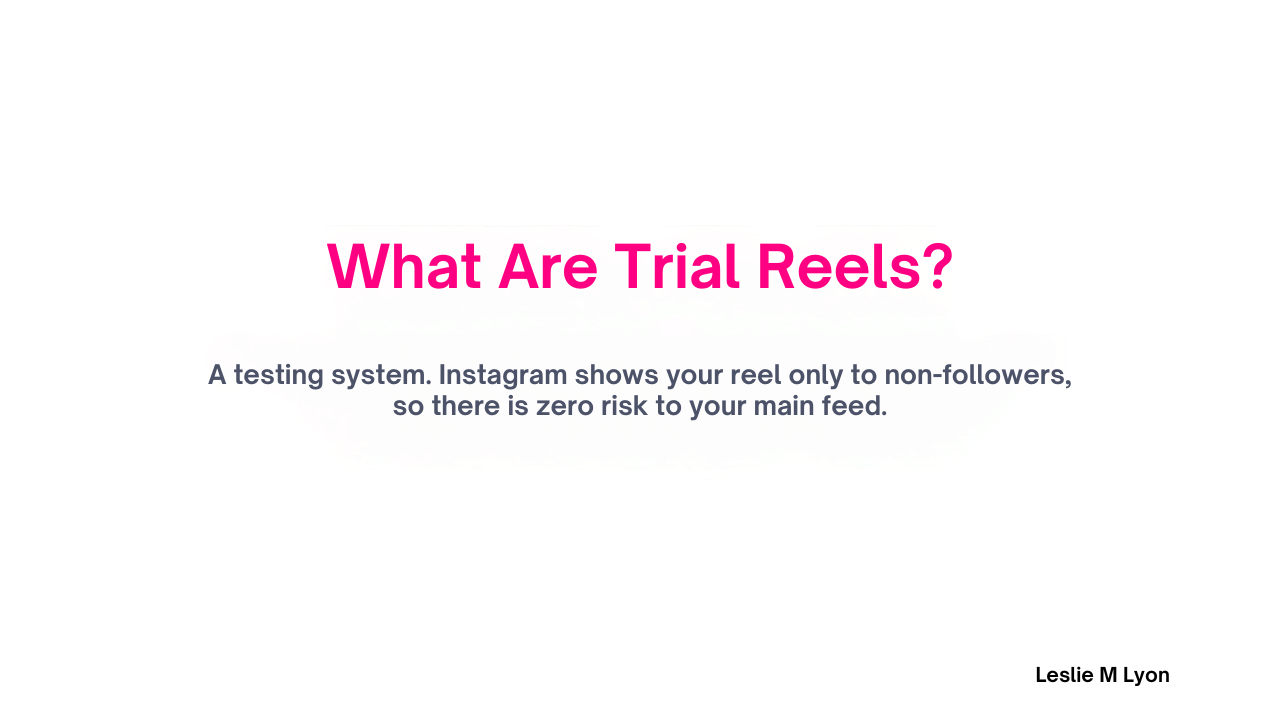
Trial Reels are a testing system, not a posting feature. When you publish one, Instagram shows it only to people who do not follow you. None of your current followers see it. Instagram then measures how that cold audience responds and decides whether the content deserves to be pushed to even more people.
That is the genius of it. You get to test an idea on strangers with zero risk to your main feed. If it flops, no harm done and your followers never saw it. If it lands, you have proof before you ever commit it to your audience.
Trial Reels vs regular reels: the key difference
A regular reel goes to your followers first. Their response shapes how far it travels, which means a weak reel can drag down your reach and train the algorithm to show your next post to fewer people. A Trial Reel skips your followers entirely and goes straight to a cold audience. That means two things. First, your existing reach is protected no matter how the test goes. Second, the feedback you get is cleaner, because it is coming from people with no loyalty to you, which is exactly who you need to win to grow.
To use Trial Reels you generally need at least a thousand followers. If you are under that, your job is simpler. Make regular reels engaging enough that people share them, comment on them, and send them to a friend. Master that first and the feature unlocks as you grow.
How the 72-hour window works
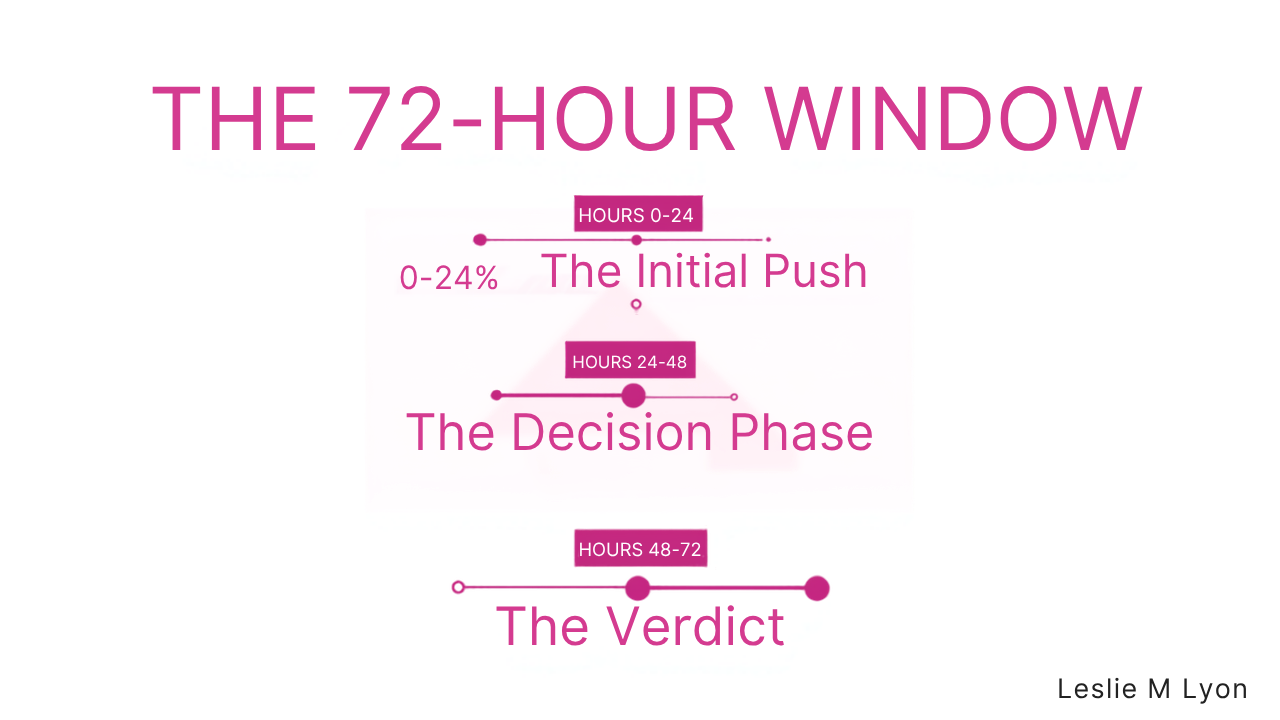
Once your Trial Reel is live, the clock starts. Instagram watches roughly the first 72 hours, and it breaks down into three phases.
- Hours 0 to 24, the initial push. Instagram sends it to a small cold sample. You are watching for views that climb steadily versus spike and flatline. A spike with strong saves and shares means the algorithm tested it and approved. A spike with no engagement means it stepped back.
- Hours 24 to 48, the decision phase. This is the most important window. Instagram is deciding how far to distribute. Content still climbing here is earning real distribution. Content flatlined here is telling you the test is not working.
- Hours 48 to 72, the verdict. Content still building at the 72-hour mark is content the algorithm has validated and is ready to push hard.
The signals that matter
Views are the vanity number. The algorithm does not reward views. It rewards what people do after the view. These are the signals it is really reading:
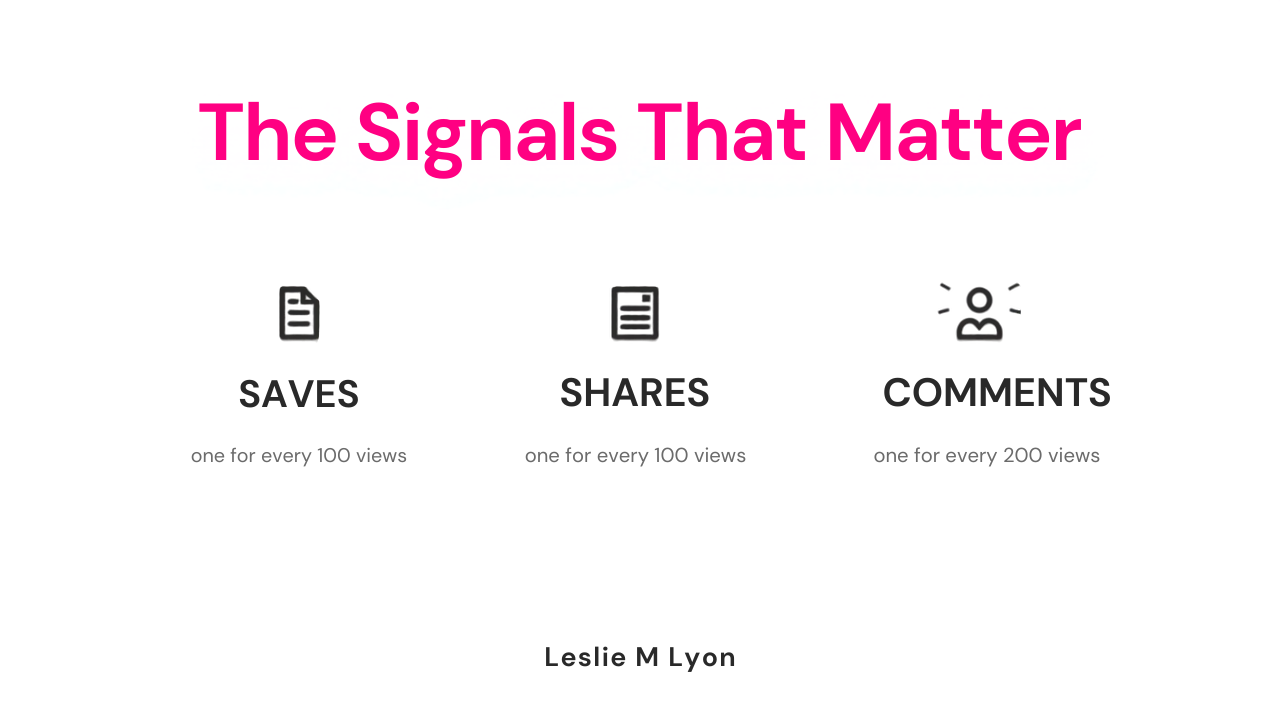
- Saves tell Instagram the content is worth keeping. Strongest quality signal there is.
- Shares and reposts tell Instagram it is worth spreading. This is what reaches brand new people.
- Comments tell Instagram it is worth talking about. Real ones, not one word.
- Follows tell Instagram it is worth coming back for.
Crossing a hundred thousand views with those signals attached is what viral means. High views without them is just reach that goes nowhere. A good rule of thumb is roughly one save and one share per hundred views, and one real comment per two hundred.
How to post your first Trial Reel
The mechanics are simple. When you go to share a reel, look for the Trial Reels option on the sharing screen, toggle it on, and post. Your followers will not see it. Then you watch the insights over the next three days and read the signals above. If you do not see the option, you are likely under a thousand followers, on a personal account instead of a professional one, or your app needs an update.
How to use Trial Reels to go viral
Here is the method, not just the theory.
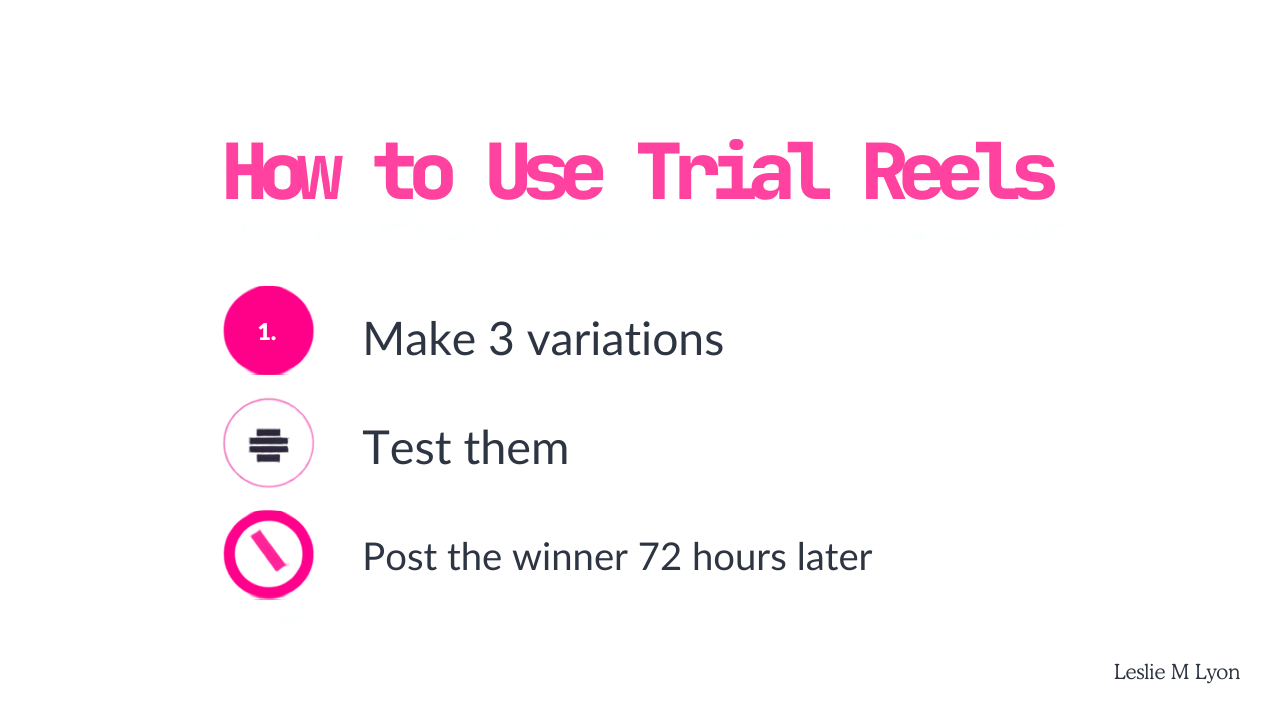
- Make three or more variations of the same reel. Same idea, different hooks. Push them all into Trials and see which version’s signals pop.
- Read the 72-hour signals. Let the cold audience vote with their saves and shares.
- Post the winner to your main feed at least 72 hours later. Never at the same time, because posting both at once splits and diminishes your reach.
- Promote, iterate, or cut. If it performed, promote it and make more like it. If it showed promise but did not break through, rebuild it with a stronger hook. If it flopped, cut it. It was just data, and the test cost you nothing.
- Do not repost everything. Pay attention to what hit and what did not, and let that steer the next round of tests.
Trial Reels are component one of a larger system. They get you the reach. SEO captions, stories, carousels, and automations turn that reach into engagement and leads. You can see the full picture in the Viral Framework, and a deeper how-to in using Trial Reels effectively.
Want help running this on your account?
Knowing the steps is strategy. Running them on repeat until they compound is a system. That is the part most people never build, and it is the difference between a few good reels and an account that pulls leads every week.
If you want someone to set it up with you, book a quick strategy call and let’s look at your account together. No hard pitch. Just a real plan.
Frequently asked questions
How do Trial Reels work on Instagram?
You post a reel that only non-followers can see. Instagram shows it to a cold audience, measures the response over about 72 hours, and pushes it further if the engagement signals are strong. Your existing followers never see it unless you promote it.
Do I need a certain number of followers to use Trial Reels?
Generally you need at least a thousand followers for the feature to appear. Under that, focus on making regular reels engaging enough to be shared and saved.
How long do Trial Reels take to work?
Watch the first 72 hours. The 24 to 48 hour window is where Instagram makes its real distribution decision. Content still climbing at 72 hours has been validated.
What makes a Trial Reel go viral?
Engagement, not views. Saves, shares, reposts, and real comments are the signals that tell Instagram to keep pushing. Aim for roughly one save and one share per hundred views, and one comment per two hundred.
Should I post the same reel to my feed and as a Trial Reel?
No. Posting both at once diminishes your reach on both. Test with the Trial Reel first, then post the winner to your feed at least 72 hours later.
Are Trial Reels worth it?
Yes. They are one of the few ways to test content on a cold audience with zero risk to your existing reach. Used as a testing system rather than a view booster, they are the fastest way to find what makes you go viral.
Leave Your Comment