
Social Media Marketing 2026: Complete Strategy Guide for Business Growth

Social Media Marketing 2026: Complete Strategy Guide for Business Growth

Social Media Marketing 2026: Complete Strategy Guide for Business Growth

Social media marketing isn’t hard. You’re just doing it wrong.

If you’re exhausted from creating constant content with little to show for it, wondering why your posts aren’t converting to customers, or feeling like you’re shouting into the void, this guide will change everything.

Social media marketing in 2026 isn’t about posting more. It’s about posting smarter with systems that work.

The Social Media Marketing Reality Check

Most businesses approach social media fragmented from their offers and disconnected from each other:

  • Post daily because “consistency is key”
  • Chase every trending hashtag and audio
  • Create different content for every platform from scratch
  • Hope the algorithm will favor them
  • Measure success by likes and follows instead of revenue

The result? Burnout, scattered efforts, and a marketing strategy that feelsfragmetned. 

Here’s what changed in 2026: Social media became search engines. Hootsuite statistic about 72% of consumers researching on social. Platforms started rewarding authentic, valuable content over polished perfection. And businesses finally realized that marketing isn’t about doing more—it’s about doing the right things systematically.

The Marketing Strategy Framework That Scales

Effective social media marketing in 2026 requires a framework, not random tactics. At the foundation are two essential components:

  1. Your Marketing Ecosystem – the structure that connects all your efforts
  2. Your Marketing Flywheel – the engine that creates sustainable momentum

Your Marketing Ecosystem

Your marketing ecosystem is every part of your strategy working together as an interconnected system:

  • Content creation feeds your SEO and social presence
  • Social media drives traffic to your website and builds community
  • Website traffic converts to email subscribers and leads
  • Email marketing nurtures relationships and drives sales
  • Customer results generate referrals and testimonials
  • Paid advertising amplifies what’s already working organically

When one part of your ecosystem thrives, it strengthens everything else. But an ecosystem without momentum becomes overwhelming, which is where your flywheel comes in.

Your Marketing Flywheel

The marketing flywheel gives your strategy rhythm and creates sustainable growth. Unlike traditional marketing funnels that start from scratch with each campaign, a flywheel builds on itself.

At the center is strategic content repurposing. One strong piece of content can fuel 15-30 assets across multiple platforms. Research from HubSpot shows that 48% of marketers repurpose content across platforms</a>, proving this strategy’s widespread effectiveness. Same core message, different formats, maximum reach without burnout.

The 8 Marketing Pillars for Social Media Success

Your social media marketing strategy needs to align with proven business growth principles. These 8 Marketing Pillars ensure every platform and message works together intentionally:

1. Attract & Engage

Get the right people paying attention through strategic content, SEO optimization, and social presence that resonates with your ideal client.

2. Capture & Convert

Turn attention into action with compelling lead magnets, clear calls-to-action, and content that moves people forward in their journey.

3. Nurture Relationships

Build trust over time through valuable content, consistent delivery, and authentic engagement that deepens connections.

4. Book & Close

Make the sales process smooth with clear service offerings, easy booking systems, and content that pre-qualifies ideal clients.

5. Paid to Perform

Use paid social strategically to amplify what’s working organically, not as a band-aid for broken systems.

6. Deliver & Delight

Create exceptional client experiences that exceed expectations and generate organic word-of-mouth marketing.

7. Upsell & Cross-Sell

Expand relationships naturally by serving clients at deeper levels with additional services or premium offerings.

8. Amplify the Love

Turn satisfied clients into advocates who refer, review, and promote your business within their networks.

Business vs Personal Brand: The Strategic Separation

One of the biggest mistakes in social media marketing is trying to do everything from one account. Here’s why strategic separation creates better results:

The Business Page Strategy

Your business social media profiles focus on:

  • Services, products, and offerings
  • Team members and company culture
  • Industry expertise and thought leadership
  • Client results and testimonials
  • Company values and mission

The Personal Brand Strategy

Your personal profiles focus on:

  • Your unique expertise and perspective
  • Behind-the-scenes personality and lifestyle
  • Industry insights and opinions
  • Your story and what makes you different
  • Building relationships with ideal clients

Real Example: Real Estate Professional

Consider a real estate broker who owns a firm:

Business Page Ideal Clients:

  • Home buyers and sellers in the area
  • Real estate agents looking to join the firm

Personal Brand Ideal Clients:

  • New agents to recruit
  • High-end buyers and sellers who want to work with the owner directly
  • Industry professionals and referral partners

Cross-Pollination Strategy: The business page showcases listings, agent successes, and market insights. The personal brand shares the owner’s expertise, personality, and unique approach to real estate. Each encourages followers to check out the other.

This creates trust and allows the owner to establish deep authority while the business maintains its professional presence. People buy from people they know, like, and trust—but they also want to see a solid business behind that person.

The Authenticity vs Polish Framework

The biggest shift in social media marketing for 2026 is the move away from over-polished content toward authentic connection. Here’s why “perfect” content is actually hurting your results:

The Uncanny Valley Effect

Even when templated content looks “good,” something feels off. Our brains are hardwired to detect patterns, and when everything is too consistent, too perfect, too templated, it triggers an uncanny valley response.

When every video has:

  • The exact same framing and background
  • The exact same aesthetic and energy
  • The exact same format and structure

Your content starts feeling manufactured, not human. People scroll past it and never take any of your message in. 

The Connection Gap

Social media works because it creates relationships. We connect with imperfections the nervous laugh, stumbling over words, the dog barking in the background, genuine smiles, hair that looks different because you live your life between posts.

Neither AI nor rigid templates can replicate the vulnerability that creates true connection.

The Trust Erosion

Once your audience suspects you’re either using AI heavily or leaning on templates that you’re not present, trust evaporates. Edelman Trust Barometer data about 81% needing trust, they wonder:

  • “If you’re not here, what else isn’t real?”
  • “Are these your real opinions, or are you following a formula?”
  • “Is there a real person behind this brand?”

The Solution: Strategic Authenticity

Be a touch less polished and a lot more real:

Vary Your Environment:

  • Switch up your background
  • Film in different rooms, outside, in your car
  • Let people see that you exist in multiple spaces

Change Your Approach:

  • Different outfits signal different days and moments
  • Hair up, hair down, messy bun, fresh blowout—it’s all real
  • Mix batched content with spontaneous moments

Embrace Unpolished Moments:

  • Don’t edit out every “um” and pause
  • Let your kids interrupt
  • Keep genuine laughter and behind-the-scenes moments
  • Show the mess alongside the success

Break Your Own Patterns:

  • If you always use trending audio, try speaking directly to camera
  • If you always talk to camera, try voiceover with B-roll
  • Keep your audience guessing in a good way

Content Creation Systems That Scale

The most powerful part of social media marketing is strategic content repurposing. Here’s how to create once and distribute everywhere:

Start with Pillar Content

Create substantial content that can be broken into multiple pieces:

  • Long-form blog posts (1,500-3,000 words)
  • Newsletter deep-dives
  • Podcast episodes
  • YouTube videos
  • Webinar recordings

Repurpose into Micro-Content

Transform your pillar content into:

  • Social media posts across platforms
  • Quote graphics for Instagram and LinkedIn
  • Short-form video clips (Reels, Shorts, TikTok)
  • Email sequences and nurture campaigns
  • Thread posts for Twitter/X
  • Carousel posts for education

Platform-Specific Optimization

Instagram: Focus on visual storytelling, searchable captions, and strategic hashtags LinkedIn: Professional insights, industry commentary, and thought leadership TikTok: Educational content, behind-the-scenes, and trend participation YouTube: In-depth tutorials, case studies, and searchable content

Measuring Social Media Marketing ROI

Stop measuring vanity metrics. Sprout Social research about 2.3x better performance Start tracking business results:

Essential Metrics to Track

Lead Generation:

  • Contact form submissions from social
  • Email sign-ups attributed to social content
  • Discovery call bookings from social media

Website Performance:

  • Traffic from social media platforms
  • Time spent on site from social visitors
  • Page views and content engagement

Conversion Metrics:

  • Social media to sale conversion rate
  • Customer acquisition cost from social
  • Lifetime value of social media customers

Engagement Quality:

  • Comments and meaningful interactions
  • Content saves and shares
  • Direct messages and inquiries

Tools for Measurement

  • Google Analytics for traffic and conversion tracking
  • Native platform analytics for engagement data
  • CRM integration for lead attribution
  • Email marketing metrics for list growth
  • Sales tracking for revenue attribution

Common Social Media Marketing Mistakes in 2026

Mistake 1: Treating AI as Your Main Content Creator

AI can help with outlines, ideas, and repurposing, but it should never replace your voice, stories, or perspective. People follow you for you—don’t let AI dilute that.

Mistake 2: Trying to Be Everywhere at Once

You don’t need to be on every platform. Choose 2-3 platforms where your ideal clients spend time and show up consistently with quality content.

Mistake 3: Creating Content Without Strategy

Random content doesn’t build momentum. Every piece should serve a purpose within your marketing framework and guide people toward your offers.

Mistake 4: Ignoring the Repurposing Opportunity

If you’re creating fresh content for every platform, you’re working 10x harder than necessary. Smart repurposing multiplies your content impact.

Mistake 5: Focusing on Followers Instead of Revenue

A smaller, engaged audience of ideal clients is worth more than thousands of followers who will never buy from you.

Social Media Marketing Action Plan

Ready to implement a social media marketing strategy that drives real business results? Here’s your step-by-step approach:

Phase 1: Foundation (Week 1-2)

  1. Audit Your Current Presence
    • Review your existing social media accounts
    • Identify what’s working and what isn’t
    • Determine if you need separate business/personal accounts
  2. Define Your Strategy
    • Choose 2-3 platforms for focused effort
    • Identify your ideal client on each platform
    • Create content pillars and themes
  3. Set Up Systems
    • Install analytics and tracking
    • Create content calendar templates
    • Establish repurposing workflows

Phase 2: Content Creation (Week 3-6)

  1. Create Pillar Content
    • Write comprehensive blog posts or record videos
    • Develop frameworks and educational content
    • Build a bank of repurposable assets
  2. Develop Platform-Specific Content
    • Adapt pillar content for each platform
    • Create platform-native formats
    • Optimize for each algorithm and audience
  3. Establish Posting Rhythm
    • Consistent posting schedule
    • Mix of content types
    • Regular engagement and community building

Phase 3: Optimization (Week 7-12)

  1. Analyze Performance
    • Review metrics and adjust strategy
    • Identify top-performing content
    • Double down on what works
  2. Refine and Scale
    • Improve underperforming areas
    • Increase investment in successful platforms
    • Expand successful content formats
  3. Measure ROI
    • Track leads and sales from social media
    • Calculate customer acquisition costs
    • Adjust strategy based on business results

The Future of Social Media Marketing

Social media marketing in 2026 isn’t just about the feed anymore, it’s about search, discovery, and genuine connection. Platforms have evolved into search engines where people find solutions, and successful businesses are adapting their strategies accordingly.

The companies thriving aren’t posting more; they’re posting smarter with:

  • Searchable content optimized for platform algorithms
  • Repurposed assets that work across multiple channels
  • Human, authentic content that stands out from AI-generated noise
  • Strategic systems that create predictable business results

Your social media marketing strategy needs to evolve from “post and hope” to “create and be found.”

Ready to Build a Social Media Marketing Strategy That Drives Results?

This comprehensive approach to social media marketing, combining authentic content creation, strategic repurposing, and business-focused measurement, is exactly what we implement in my Marketing Flywheel Strategy Call.

We’ll map out: 

Your complete social media marketing ecosystem 

Platform-specific content strategies

Authentic brand positioning and voice 

Content repurposing and scaling systems 

ROI measurement and optimization plan 

Your 90-day implementation roadmap

Stop creating content that doesn’t convert. Start building a social media marketing strategy that scales your business. 


That's Giving Ick - Market Like a Lyon July 2026 newsletter header

That’s Giving… Ick

How I train my AI content agent to write captions that perform without going basic or fake, plus the two Trial Reel questions I get asked the most.

Read More »
Social Media Strategy 2026: Why Your Content Needs to Be Searchable (Not Just Scrollable)

Social Media Strategy Framework: How to Build a System That Scales (Not Just More Content)

Social Media Strategy 2026: Why Your Content Needs to Be Searchable (Not Just Scrollable)

Social media is shifting in a way most business owners haven’t noticed yet.

And 2026 is going to separate those who adapt from those who disappear.

Here’s what’s changing: people aren’t just scrolling anymore. They’re searching.

TikTok, Instagram, and YouTube have become search engines. When someone needs a service provider, wants to learn a skill, or has a problem to solve, they’re not opening Google first.

They’re typing it into TikTok, Instagram Search, or YouTube.

This changes everything about your social media strategy.

The Biggest Social Media Shift Since Reels

Platforms are now using your captions, keywords, hashtags, and on-screen text to decide if your content shows up in searches or gets buried.

This is the biggest shift in social media since Reels launched.

Add to that: AI is crawling social content the same way it’s always crawled blogs and websites. Your posts aren’t just reaching your followers anymore.

They’re creating a digital footprint that tells AI:

  • What you’re an authority on
  • What problems you solve
  • Who you serve
  • Whether you’re worth recommending

Your social media strategy in 2026 can’t just focus on engagement. It needs to focus on discoverability.

Why Social Platforms Became Search Engines

The shift didn’t happen overnight. Here’s what led to it:

1. Gen Z and Millennials Changed Search Behavior

Younger audiences never developed the habit of “Googling everything.” They grew up with:

  • TikTok for how-to content
  • Instagram for recommendations
  • YouTube for deep-dive learning

Studies show that 40% of Gen Z uses TikTok or Instagram as their primary search engine instead of Google. Google’s internal research confirms this shift, with their own senior executives acknowledging that young people increasingly bypass Google Maps and Search in favor of TikTok and Instagram for discovery.


Research by Adobe reveals that 64% of Gen Z specifically uses TikTok for search, with nearly 10% preferring it over Google entirely – making TikTok optimization critical for reaching younger audiences.

2. Visual Search Is More Intuitive

Reading through text-heavy blog posts feels outdated when you can:

  • Watch a 60-second video tutorial
  • See real results in before/after content
  • Get recommendations from real people, not brands

Social platforms deliver answers faster and more authentically.

3. Platforms Invested in Search Infrastructure

Instagram, TikTok, and YouTube didn’t just allow search. They built entire systems around it:

  • Advanced keyword algorithms
  • Search result ranking systems
  • Content categorization based on captions and audio
  • On-screen text recognition (OCR technology)

These platforms now function like Google for specific types of queries.

What This Means for Your Social Media Strategy

Your content isn’t just competing for attention in the feed anymore.

It’s competing for visibility in search results.

That requires a completely different approach to how you create, caption, and structure your content.

Old Social Media Strategy (Pre-2026):

  • Post consistently
  • Use trending audio
  • Create engaging hooks
  • Hope the algorithm shows your content

New Social Media Strategy (2026 and Beyond):

  • Create searchable, problem-solving content
  • Use strategic keywords in captions
  • Optimize hashtags for search intent
  • Structure content to answer specific questions
  • Make your content work like SEO-optimized blog posts

The businesses winning in 2026 won’t be posting more. They’ll be posting smarter

Instagram SEO: How to Optimize for Search in 2026

Instagram is no longer just a photo-sharing app. It’s a full-scale search engine with over 2 billion users actively searching for content.

Here’s how to optimize your Instagram strategy:

1. Captions Are Your New SEO Copy

Your Instagram captions need to include:

  • Target keywords your audience is searching for
  • Problem-solving language that matches search queries
  • Clear, descriptive text that tells Instagram what your post is about

Example: ❌ “Feeling inspired today ✨” ✅ “3 marketing strategies for small business owners who want to scale without paid ads”

The second caption is searchable. Instagram’s algorithm knows exactly what your post is about and who needs to see it.

2. Hashtags Are Search Tools, Not Just Discovery

Stop using random trending hashtags. Start using keyword-focused hashtags that align with search intent.

Ask yourself: “What would someone type into Instagram Search if they needed my solution?”

Then use those phrases as hashtags:

  • #marketingstrategy
  • #contentmarketingtips
  • #smallbusinessgrowth
  • #socialmediaforentrepreneurs

Instagram now treats hashtags like search filters. Use them strategically. Only 5 atm this is a new adjustment by instagram. 

3. On-Screen Text in Reels Gets Indexed

Instagram’s OCR (optical character recognition) technology reads the text you put on your Reels.

That means your on-screen text should include:

  • Keywords related to your topic
  • Clear value propositions
  • Searchable phrases

This text isn’t just for viewers. It’s for Instagram’s algorithm to understand and categorize your content.

4. Alt Text Matters

Yes, you should be writing alt text for your Instagram images. It helps with:

  • Accessibility
  • SEO optimization
  • Algorithm understanding

Describe your image with relevant keywords, but make it natural and helpful.


Instagram is no longer just a photo-sharing app. It’s a full-scale search engine with over 2 billion users actively searching for content. Instagram optimization experts confirm that the platform now functions like Google for specific queries, with users typing exact search terms like “best fine dining Dubai” or “marketing tips” directly into Instagram’s search bar.

TikTok Search Optimization: The New SEO

Lorem ipsum dolor sit amet,

TikTok isn’t just for viral dances anymore. It’s where millions of people search for:

  • How-to tutorials
  • Product recommendations
  • Business advice
  • Life hacks
  • Service providers

40% of young people now use TikTok as their primary search engine.

How to Optimize Your TikTok Content for Search:

  1. Use Keywords in Your Video Captions

Just like Instagram, your TikTok captions need to include searchable keywords.

Think about what someone would type into TikTok search:

  • “How to start a podcast”
  • “Best CRM for small business”
  • “Marketing tips for coaches”

Use those exact phrases in your captions.

  1. Say Your Keywords Out Loud in Videos

TikTok’s algorithm recognizes spoken words. When you say keywords out loud in your video, TikTok understands the content topic better.

Example: If your video is about email marketing, actually say “email marketing strategy” in the video.

  1. Hook Your Viewer with Search Intent

Start your videos by directly addressing what someone searched for:

  • “If you’re searching for content ideas…”
  • “Looking for an easy way to repurpose content? Here’s how…”
  • “Wondering how to optimize Instagram? Let me show you…”

This signals to TikTok that your video answers a specific search query.

  1. Create “How-To” and Tutorial Content

How-to content dominates TikTok search results. Structure your videos to answer specific questions:

  • “How to create a marketing strategy in 10 minutes”
  • “How to use Canva for social media graphics”
  • “How to batch create content for the month”

These formats perform well in both the feed AND search results.

YouTube SEO Best Practices for 2026:

  1. Keyword-Optimized Titles

Your video title should include the exact phrase someone would search for.

Examples:

  • “Marketing Strategy Framework: How to Build a System That Scales”
  • “Instagram SEO Tips: How to Get Found in Instagram Search”
  • “Content Repurposing Strategy: Turn 1 Video Into 20 Posts”
  1. Detailed Video Descriptions

Write 200-300 word descriptions that include:

  • Primary keywords in the first 2 sentences
  • Supporting keywords throughout
  • Timestamps for longer videos
  • Links to related resources
  • You can take the transcript into ai for this and make it work for you. 
  1. Use Chapters and Timestamps

YouTube loves structured content. Add chapters to your videos so viewers can jump to specific sections. This also helps YouTube understand your content better.

  1. Upload Forgotten Content

If you have webinars, trainings, podcasts, or presentations sitting in Google Drive, upload them to YouTube.

That content has value beyond the moment you created it. Make it discoverable.


Less AI, More Real: The Authenticity Shift

Here’s where most people are getting social media strategy wrong in 2026:

They’re hiding behind AI-generated content.

AI can be your co-pilot, not your main character.

The brands winning in 2026 aren’t posting perfectly polished AI-generated content. They’re showing up:

  • Authentically
  • With personality
  • With humor
  • With humanity

People can smell AI content from a mile away.

And while AI can help you:

  • Outline content ideas
  • Repurpose existing content
  • Scale your creation process

It should never replace:

  • Your voice
  • Your stories
  • Your point of view
  • Your unique perspective

How to Use AI Without Losing Authenticity

✅ Use AI to:

  • Generate content ideas
  • Create outlines
  • Repurpose long-form content into short formats
  • Write first drafts you edit heavily
  • Automate tedious tasks

❌ Don’t use AI to:

  • Write your captions word-for-word
  • Create all your graphics
  • Replace your voice in videos
  • Generate “personality” you don’t have
  • Pretend to be you

Your audience follows you for YOU. Don’t let AI dilute that.

What You Need to Do Right Now: 3 Immediate Actions

1. Make YouTube Your Content Archive

If you have long-form content sitting in your Google Drive, on old hard drives, or in forgotten folders, get it live on YouTube.

Why this matters:

  • YouTube is a search engine owned by Google
  • Your videos get discovered, ranked, and recommended based on searchability
  • Old content has new life through search optimization

Action steps:

  • Upload that webinar
  • Repurpose that training
  • Turn podcast episodes into video
  • Add keyword-optimized titles and descriptions

2. Make Instagram Your Hero Channel

Instagram isn’t just for pretty posts anymore. It’s for searchable, valuable, keyword-rich content that shows up when your ideal client is actively looking for answers.

What matters now:

  • Captions with strategic keywords
  • Hashtags as search tools
  • On-screen text in Reels
  • Alt text for images

If your Instagram content isn’t structured to be found, you’re missing the entire shift.

Action steps:

  • Audit your last 10 posts for searchability
  • Rewrite captions with keyword optimization
  • Choose hashtags based on search intent, not popularity
  • Add keyword-rich on-screen text to Reels

3. Build a Content Repurposing System

You cannot create fresh content for every platform every day and maintain your sanity.

Repurposing isn’t lazy. It’s strategic.

One piece of content should live in multiple formats:

Example 1: Blog post → Carousel → Reel → Email → Thread → Quote graphic

Example 2: Podcast episode → YouTube video → Shorts → Newsletter → Social captions

Example 3: Webinar → Blog series → Lead magnet → Email sequence

Same core message. Different formats. Maximum reach without burnout.


Search industry analysis shows that over half of business owners now use TikTok to promote their companies, recognizing its evolution into a legitimate search platform.

Social Media Strategy 2026: The New Rules

The businesses thriving in 2026 won’t be the ones posting more.

They’ll be the ones showing up smarter with:

Searchable content optimized for platform algorithms
Repurposed assets that work across multiple channels
Human, authentic content that stands out from AI-generated noise
Strategic keywords in captions, titles, and on-screen text
Problem-solving content that answers real search queries

Your social media strategy needs to evolve from “post and hope” to “create and be found.”

The Bottom Line on Social Media in 2026

Social media isn’t just about the feed anymore. It’s about search.

If your content isn’t optimized to be discovered, you’re invisible.

The platforms have changed. Your strategy needs to change with them.

Stop creating content just to scroll past.

Start creating content designed to be found.

Ready to Build a Social Media Strategy That Actually Gets You Found?

This is exactly what we map out in my Marketing Flywheel Strategy Call.

We’ll build:

✅ Your searchable content strategy
✅ Your platform optimization plan
✅ Your repurposing system
✅ Your keyword and hashtag strategy
✅ Your 90-day action plan

Book Your Marketing Flywheel Intro Call

Stop posting into the void. Start showing up where your ideal clients are searching.


More information on my marketing strategy here. 

Facebook
Twitter
LinkedIn
Reddit
Pinterest
Email

How to Find TikTok Trends Fast: A Practical Guide for Entrepreneurs

How to Find TikTok Trends Fast: A Practical Guide for Entrepreneurs

How to Find TikTok Trends Fast: A Practical Guide for Entrepreneurs

If you are gearing up to use social media trends to grow your business in 2026, there is one thing you need to master: how to find trends quickly without getting sucked into an endless scroll.

You do not need hours on TikTok.
You do not need to “stay up to date” daily.
And you definitely do not need to waste time hoping the algorithm magically delivers inspiration.

Here is exactly how entrepreneurs can find TikTok trends fast, stay ahead of the curve, and use them strategically across every platform.

Use TikTok’s Trend Discovery Tools First

TikTok literally created a trend finder for you, and most creators still do not use it.

Where to Find It

  1. Open TikTok or Click Here
  2. Tap “Creative Center” or go to your profile click the three dashes in the upper right and go to Tiktok Studio, scroll down to inspo and start finding a trend you vibe with. 
    (You can also Google “TikTok Creative Center” and access it in your browser)
  3. Choose “Trends”
  4. Select one:
    • Songs
    • Hashtags
    • Creators
    • Videos

You will instantly see:

  • What is trending
  • How fast it is growing
  • What industries it works for
  • Whether it is rising or declining

This is the cleanest, most reliable trend intelligence available. No guessing. No rabbit holes. Just data.

Use Your For You Page as a Personalized Trend Forecast

Your For You Page is one of the best trend indicators because it customizes trends to your niche.

What to Watch For

Look for:

  • The same audio repeating, these audios will also be on instagram and are usually trending or about it.  


  • The same video format repeating


  • The same style or joke showing up across different creators


If you see something three times in ten minutes, it is an active trend.

Bonus:
Your FYP often shows micro-trends relevant to your industry.
If you are in real estate and suddenly see the same audio across multiple realtors, that is your green light. Now you just have to customize to your style.  This is fairly simple and if you lack creativity drop a few screenshots into chat and explain the trend and ask for ideas. 

Search TikTok for Trend Lists (Shortcut Most People Ignore)

Some creators track trends daily and share them for free. Use them.

What to Search:

  • “trending sounds”

  • “viral audio”

  • “trending now”

  • “trends this week”

You will instantly find curated trend lists that save you time and tell you what is hot today.

Let other creators do half the work for you.

Save Trending Sounds All Week Long

This is the step that makes everything effortless later.

As you scroll naturally:

  • Save trending sounds


  • Save formats you want to recreate


  • Bookmark ideas


Do not try to film in the moment.
Do not break your workflow.

Just save it and move on.

When you sit down to batch your content, you will have a ready-made library of trend options already vetted by TikTok.

The Real Shortcut: Batch Record Your Trend Content

Most entrepreneurs waste time because they try to create trends one video at a time.

Batching solves everything.

Weekly Workflow

Friday (or your content day):
Record 5 to 10 videos using the sounds you saved all week.

Then post:

  1. Instagram first (your hero channel)

  2. Repurpose everywhere else:

    • TikTok

    • Pinterest

    • Facebook Reels

    • YouTube Shorts

    • LinkedIn

One trend → several pieces of content → multiple platforms.

How Much Time Should You Spend Finding Trends?

  • Check TikTok Creative Center

  • Scroll your FYP

  • Save 3–5 relevant sounds

Thursday (10 minutes):

  • Search “trending sounds”

  • Re-check Creative Center

  • Save 3–5 more sounds

Friday:
Batch record and schedule your content.

That is it.

No overwhelm.
No burnout.
Just consistent visibility.

Why This Works Better Than Scrolling for Hours

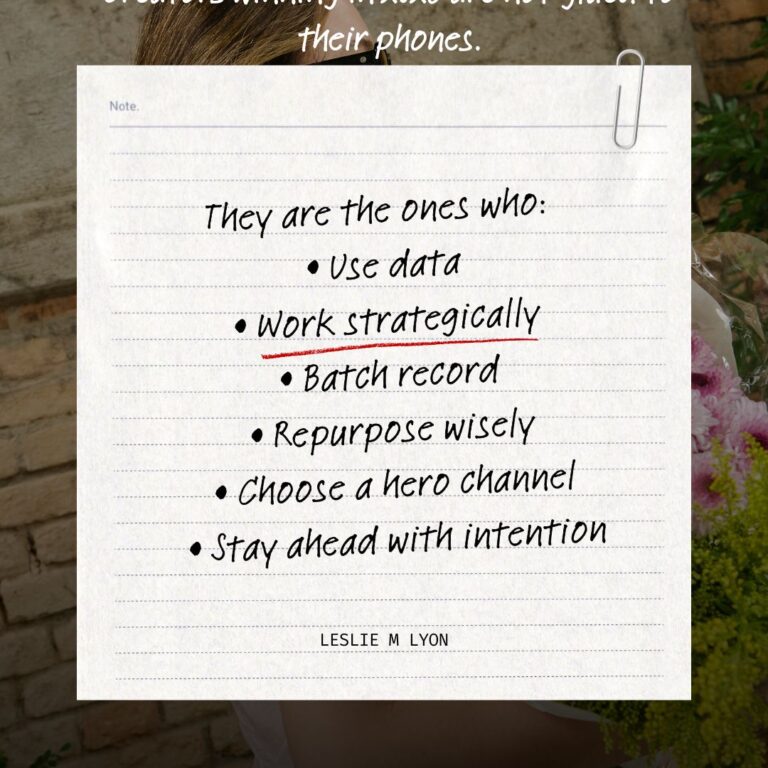
The creators winning with trends in 2026 are not the ones glued to their phones.

They are the ones who:

  • Use data

  • Work strategically

  • Batch record

  • Repurpose wisely

  • Choose a hero channel

  • Stay ahead of the trend curve with intention

You are not trying to “keep up.”
You are trying to build a system.

This is the system.

Finding TikTok Trends Fast: Your Action Plan

Here is your full weekly trend routine in one place:

  • Check TikTok Creative Center

  • Scroll your FYP intentionally

  • Search “trending sounds”

  • Save relevant audio

  • Batch record content

  • Post on Instagram first

  • Repurpose everywhere else

Simple. Scalable. Sustainable.

Next Steps

To continue building your trend strategy, read the next two posts in this series:

Want weekly strategies that actually move the needle?
Subscribe to Market Like a Lyon and get smarter marketing in your inbox every other Sunday.

That's Giving Ick - Market Like a Lyon July 2026 newsletter header
Newsletter
Leslie Lyon

That’s Giving… Ick

How I train my AI content agent to write captions that perform without going basic or fake, plus the two Trial Reel questions I get asked the most.

Read More »

Facebook
Twitter
LinkedIn
Pinterest
Reddit
Email