Social Media Marketing 2026: Complete Strategy Guide for Business Growth

Social Media Marketing 2026: Complete Strategy Guide for Business Growth

Social Media Marketing 2026: Complete Strategy Guide for Business Growth

Social media marketing isn’t hard. You’re just doing it wrong.

If you’re exhausted from creating constant content with little to show for it, wondering why your posts aren’t converting to customers, or feeling like you’re shouting into the void, this guide will change everything.

Social media marketing in 2026 isn’t about posting more. It’s about posting smarter with systems that work.

The Social Media Marketing Reality Check

Most businesses approach social media fragmented from their offers and disconnected from each other:

  • Post daily because “consistency is key”
  • Chase every trending hashtag and audio
  • Create different content for every platform from scratch
  • Hope the algorithm will favor them
  • Measure success by likes and follows instead of revenue

The result? Burnout, scattered efforts, and a marketing strategy that feelsfragmetned. 

Here’s what changed in 2026: Social media became search engines. Hootsuite statistic about 72% of consumers researching on social. Platforms started rewarding authentic, valuable content over polished perfection. And businesses finally realized that marketing isn’t about doing more—it’s about doing the right things systematically.

The Marketing Strategy Framework That Scales

Effective social media marketing in 2026 requires a framework, not random tactics. At the foundation are two essential components:

  1. Your Marketing Ecosystem – the structure that connects all your efforts
  2. Your Marketing Flywheel – the engine that creates sustainable momentum

Your Marketing Ecosystem

Your marketing ecosystem is every part of your strategy working together as an interconnected system:

  • Content creation feeds your SEO and social presence
  • Social media drives traffic to your website and builds community
  • Website traffic converts to email subscribers and leads
  • Email marketing nurtures relationships and drives sales
  • Customer results generate referrals and testimonials
  • Paid advertising amplifies what’s already working organically

When one part of your ecosystem thrives, it strengthens everything else. But an ecosystem without momentum becomes overwhelming, which is where your flywheel comes in.

Your Marketing Flywheel

The marketing flywheel gives your strategy rhythm and creates sustainable growth. Unlike traditional marketing funnels that start from scratch with each campaign, a flywheel builds on itself.

At the center is strategic content repurposing. One strong piece of content can fuel 15-30 assets across multiple platforms. Research from HubSpot shows that 48% of marketers repurpose content across platforms</a>, proving this strategy’s widespread effectiveness. Same core message, different formats, maximum reach without burnout.

The 8 Marketing Pillars for Social Media Success

Your social media marketing strategy needs to align with proven business growth principles. These 8 Marketing Pillars ensure every platform and message works together intentionally:

1. Attract & Engage

Get the right people paying attention through strategic content, SEO optimization, and social presence that resonates with your ideal client.

2. Capture & Convert

Turn attention into action with compelling lead magnets, clear calls-to-action, and content that moves people forward in their journey.

3. Nurture Relationships

Build trust over time through valuable content, consistent delivery, and authentic engagement that deepens connections.

4. Book & Close

Make the sales process smooth with clear service offerings, easy booking systems, and content that pre-qualifies ideal clients.

5. Paid to Perform

Use paid social strategically to amplify what’s working organically, not as a band-aid for broken systems.

6. Deliver & Delight

Create exceptional client experiences that exceed expectations and generate organic word-of-mouth marketing.

7. Upsell & Cross-Sell

Expand relationships naturally by serving clients at deeper levels with additional services or premium offerings.

8. Amplify the Love

Turn satisfied clients into advocates who refer, review, and promote your business within their networks.

Business vs Personal Brand: The Strategic Separation

One of the biggest mistakes in social media marketing is trying to do everything from one account. Here’s why strategic separation creates better results:

The Business Page Strategy

Your business social media profiles focus on:

  • Services, products, and offerings
  • Team members and company culture
  • Industry expertise and thought leadership
  • Client results and testimonials
  • Company values and mission

The Personal Brand Strategy

Your personal profiles focus on:

  • Your unique expertise and perspective
  • Behind-the-scenes personality and lifestyle
  • Industry insights and opinions
  • Your story and what makes you different
  • Building relationships with ideal clients

Real Example: Real Estate Professional

Consider a real estate broker who owns a firm:

Business Page Ideal Clients:

  • Home buyers and sellers in the area
  • Real estate agents looking to join the firm

Personal Brand Ideal Clients:

  • New agents to recruit
  • High-end buyers and sellers who want to work with the owner directly
  • Industry professionals and referral partners

Cross-Pollination Strategy: The business page showcases listings, agent successes, and market insights. The personal brand shares the owner’s expertise, personality, and unique approach to real estate. Each encourages followers to check out the other.

This creates trust and allows the owner to establish deep authority while the business maintains its professional presence. People buy from people they know, like, and trust—but they also want to see a solid business behind that person.

The Authenticity vs Polish Framework

The biggest shift in social media marketing for 2026 is the move away from over-polished content toward authentic connection. Here’s why “perfect” content is actually hurting your results:

The Uncanny Valley Effect

Even when templated content looks “good,” something feels off. Our brains are hardwired to detect patterns, and when everything is too consistent, too perfect, too templated, it triggers an uncanny valley response.

When every video has:

  • The exact same framing and background
  • The exact same aesthetic and energy
  • The exact same format and structure

Your content starts feeling manufactured, not human. People scroll past it and never take any of your message in. 

The Connection Gap

Social media works because it creates relationships. We connect with imperfections the nervous laugh, stumbling over words, the dog barking in the background, genuine smiles, hair that looks different because you live your life between posts.

Neither AI nor rigid templates can replicate the vulnerability that creates true connection.

The Trust Erosion

Once your audience suspects you’re either using AI heavily or leaning on templates that you’re not present, trust evaporates. Edelman Trust Barometer data about 81% needing trust, they wonder:

  • “If you’re not here, what else isn’t real?”
  • “Are these your real opinions, or are you following a formula?”
  • “Is there a real person behind this brand?”

The Solution: Strategic Authenticity

Be a touch less polished and a lot more real:

Vary Your Environment:

  • Switch up your background
  • Film in different rooms, outside, in your car
  • Let people see that you exist in multiple spaces

Change Your Approach:

  • Different outfits signal different days and moments
  • Hair up, hair down, messy bun, fresh blowout—it’s all real
  • Mix batched content with spontaneous moments

Embrace Unpolished Moments:

  • Don’t edit out every “um” and pause
  • Let your kids interrupt
  • Keep genuine laughter and behind-the-scenes moments
  • Show the mess alongside the success

Break Your Own Patterns:

  • If you always use trending audio, try speaking directly to camera
  • If you always talk to camera, try voiceover with B-roll
  • Keep your audience guessing in a good way

Content Creation Systems That Scale

The most powerful part of social media marketing is strategic content repurposing. Here’s how to create once and distribute everywhere:

Start with Pillar Content

Create substantial content that can be broken into multiple pieces:

  • Long-form blog posts (1,500-3,000 words)
  • Newsletter deep-dives
  • Podcast episodes
  • YouTube videos
  • Webinar recordings

Repurpose into Micro-Content

Transform your pillar content into:

  • Social media posts across platforms
  • Quote graphics for Instagram and LinkedIn
  • Short-form video clips (Reels, Shorts, TikTok)
  • Email sequences and nurture campaigns
  • Thread posts for Twitter/X
  • Carousel posts for education

Platform-Specific Optimization

Instagram: Focus on visual storytelling, searchable captions, and strategic hashtags LinkedIn: Professional insights, industry commentary, and thought leadership TikTok: Educational content, behind-the-scenes, and trend participation YouTube: In-depth tutorials, case studies, and searchable content

Measuring Social Media Marketing ROI

Stop measuring vanity metrics. Sprout Social research about 2.3x better performance Start tracking business results:

Essential Metrics to Track

Lead Generation:

  • Contact form submissions from social
  • Email sign-ups attributed to social content
  • Discovery call bookings from social media

Website Performance:

  • Traffic from social media platforms
  • Time spent on site from social visitors
  • Page views and content engagement

Conversion Metrics:

  • Social media to sale conversion rate
  • Customer acquisition cost from social
  • Lifetime value of social media customers

Engagement Quality:

  • Comments and meaningful interactions
  • Content saves and shares
  • Direct messages and inquiries

Tools for Measurement

  • Google Analytics for traffic and conversion tracking
  • Native platform analytics for engagement data
  • CRM integration for lead attribution
  • Email marketing metrics for list growth
  • Sales tracking for revenue attribution

Common Social Media Marketing Mistakes in 2026

Mistake 1: Treating AI as Your Main Content Creator

AI can help with outlines, ideas, and repurposing, but it should never replace your voice, stories, or perspective. People follow you for you—don’t let AI dilute that.

Mistake 2: Trying to Be Everywhere at Once

You don’t need to be on every platform. Choose 2-3 platforms where your ideal clients spend time and show up consistently with quality content.

Mistake 3: Creating Content Without Strategy

Random content doesn’t build momentum. Every piece should serve a purpose within your marketing framework and guide people toward your offers.

Mistake 4: Ignoring the Repurposing Opportunity

If you’re creating fresh content for every platform, you’re working 10x harder than necessary. Smart repurposing multiplies your content impact.

Mistake 5: Focusing on Followers Instead of Revenue

A smaller, engaged audience of ideal clients is worth more than thousands of followers who will never buy from you.

Social Media Marketing Action Plan

Ready to implement a social media marketing strategy that drives real business results? Here’s your step-by-step approach:

Phase 1: Foundation (Week 1-2)

  1. Audit Your Current Presence
    • Review your existing social media accounts
    • Identify what’s working and what isn’t
    • Determine if you need separate business/personal accounts
  2. Define Your Strategy
    • Choose 2-3 platforms for focused effort
    • Identify your ideal client on each platform
    • Create content pillars and themes
  3. Set Up Systems
    • Install analytics and tracking
    • Create content calendar templates
    • Establish repurposing workflows

Phase 2: Content Creation (Week 3-6)

  1. Create Pillar Content
    • Write comprehensive blog posts or record videos
    • Develop frameworks and educational content
    • Build a bank of repurposable assets
  2. Develop Platform-Specific Content
    • Adapt pillar content for each platform
    • Create platform-native formats
    • Optimize for each algorithm and audience
  3. Establish Posting Rhythm
    • Consistent posting schedule
    • Mix of content types
    • Regular engagement and community building

Phase 3: Optimization (Week 7-12)

  1. Analyze Performance
    • Review metrics and adjust strategy
    • Identify top-performing content
    • Double down on what works
  2. Refine and Scale
    • Improve underperforming areas
    • Increase investment in successful platforms
    • Expand successful content formats
  3. Measure ROI
    • Track leads and sales from social media
    • Calculate customer acquisition costs
    • Adjust strategy based on business results

The Future of Social Media Marketing

Social media marketing in 2026 isn’t just about the feed anymore, it’s about search, discovery, and genuine connection. Platforms have evolved into search engines where people find solutions, and successful businesses are adapting their strategies accordingly.

The companies thriving aren’t posting more; they’re posting smarter with:

  • Searchable content optimized for platform algorithms
  • Repurposed assets that work across multiple channels
  • Human, authentic content that stands out from AI-generated noise
  • Strategic systems that create predictable business results

Your social media marketing strategy needs to evolve from “post and hope” to “create and be found.”

Ready to Build a Social Media Marketing Strategy That Drives Results?

This comprehensive approach to social media marketing, combining authentic content creation, strategic repurposing, and business-focused measurement, is exactly what we implement in my Marketing Flywheel Strategy Call.

We’ll map out: 

Your complete social media marketing ecosystem 

Platform-specific content strategies

Authentic brand positioning and voice 

Content repurposing and scaling systems 

ROI measurement and optimization plan 

Your 90-day implementation roadmap

Stop creating content that doesn’t convert. Start building a social media marketing strategy that scales your business. 


That's Giving Ick - Market Like a Lyon July 2026 newsletter header

That’s Giving… Ick

How I train my AI content agent to write captions that perform without going basic or fake, plus the two Trial Reel questions I get asked the most.

Read More »
Marketing Strategy Framework: How to Build a System That Scales (Not Just More Content)

Marketing Strategy Framework: How to Build a System That Scales (Not Just More Content)

Marketing Strategy Framework: How to Build a System That Scales (Not Just More Content)

Marketing isn’t about doing more. It’s about doing the right things in the right order so the system carries the workload.

I learned this the hard way.

A few years ago, I was the content machine. Posting nonstop. Showing up everywhere. Creating constantly.

And getting absolutely nowhere.

Everything looked busy. Nothing was moving the business forward.

Sound familiar?

That’s when I stopped treating marketing like a checklist and started building a marketing strategy framework.

The Problem with Random Marketing Tactics

Most businesses approach marketing the same way:

  • Post on Instagram ✓
  • Send an email ✓
  • Write a blog ✓
  • Run an ad ✓
  • Try something new when results stall ✓

The result? Scattered efforts. Inconsistent growth. Complete burnout.

This is what happens when you have tactics without a marketing strategy framework.

What Is a Marketing Strategy Framework?

A marketing strategy framework is a systematic approach that connects all your marketing channels, content, and customer touchpoints into an integrated system.

Instead of random tactics that may or may not work, a framework creates:

  • Predictable growth through strategic planning
  • Sustainable momentum through systems
  • Efficient execution through repurposing
  • Connected touchpoints across all platforms

At the core of an effective marketing strategy framework are two essential components:

  1. Your Marketing Ecosystem – the structure
  2. Your Marketing Flywheel – the engine

Understanding Your Marketing Ecosystem

Your marketing ecosystem is every part of your marketing universe working together as an interconnected system.

Think of it like a natural ecosystem where every element supports and strengthens the others:

  • Content creation feeds your SEO
  • SEO drives organic traffic to your website
  • Website traffic builds your email list
  • Email marketing nurtures relationships and drives conversions
  • Social media amplifies your message and builds community
  • Paid advertising accelerates what’s already working
  • Client results generate referrals and testimonials

When one part of your marketing ecosystem thrives, it strengthens everything else.

But here’s what most people miss: an ecosystem without momentum is still overwhelming.

That’s where the marketing flywheel comes in.

The Marketing Flywheel: Your Momentum Engine

The marketing flywheel is what gives your marketing strategy framework rhythm and creates sustainable growth.

Unlike traditional marketing funnels that start from scratch with each campaign, a flywheel builds on itself. Every piece of content, every client interaction, every platform contributes to momentum that compounds over time.

At the center of an effective marketing flywheel is strategic content repurposing.


The flywheel approach was popularized by HubSpot’s groundbreaking flywheel concept, which revolutionized how businesses think about sustainable growth by putting customers at the center of momentum.

The Test That Changed Everything

One month, I tried something radical.

Instead of being everywhere at once, I wrote just two newsletters. Deep, strategic, valuable newsletters.

Then I repurposed them into content clusters across every platform.

Those clusters became:

  • Blog posts optimized for SEO
  • LinkedIn articles for authority building
  • Instagram Reels for social engagement
  • Carousel posts for education
  • Nurture email sequences
  • Video scripts for YouTube
  • Social media captions across platforms

Two newsletters became more than 1,500 pieces of connected content.

For the first time, my content wasn’t random. It was connected.

It fed my SEO. My social channels. My nurture sequences. My authority positioning.

Everything worked together instead of against my time and energy.

That’s when the marketing strategy framework clicked.

Marketing Strategy Framework: The 8 Marketing Pillars

An effective marketing strategy framework aligns your ecosystem and flywheel with proven business growth principles.

I call these the 8 Marketing Pillars:

1. Attract & Engage

Get the right people paying attention through strategic content, SEO optimization, and social presence that resonates with your ideal client.

2. Capture & Convert

Turn attention into action with compelling lead magnets, high-converting landing pages, and clear calls-to-action that move people forward.

3. Nurture Relationships

Build trust over time through valuable email sequences, consistent content delivery, and authentic engagement that deepens connections.

4. Book & Close

Make the sales process smooth with clear service offerings, frictionless booking systems, and consultative selling approaches.

5. Paid to Perform

Use paid traffic strategically to amplify what’s already working organically, not as a band-aid for broken systems.

6. Deliver & Delight

Create exceptional client experiences that exceed expectations and generate organic word-of-mouth marketing.

7. Upsell & Cross-Sell

Expand relationships naturally by serving clients at deeper levels with additional services, products, or premium offerings.

8. Amplify the Love

Turn satisfied clients into advocates who actively refer, review, and promote your business within their networks.

When your marketing strategy framework aligns with these pillars, every platform, message, and customer touchpoint works together intentionally.


These pillars align with how successful businesses actually operate. 88% of B2B marketers use content marketing as part of their integrated digital strategies because it delivers measurable results.

Content Marketing Strategy: Your Repurposing System

The most powerful part of a marketing strategy framework is strategic content repurposing.

Here’s how an effective content marketing strategy works within your framework:

Start with pillar content:

  • Long-form blog posts (1,500-3,000 words)
  • Newsletter deep-dives
  • Podcast episodes
  • YouTube videos
  • Webinar recordings

Repurpose into micro-content:

  • Social media posts across platforms
  • Quote graphics for Instagram and LinkedIn
  • Short-form video (Reels, Shorts, TikTok)
  • Email sequences and nurture campaigns
  • Thread posts for Twitter/X
  • Carousel posts for education
  • Video clips for multiple platforms

Optimize for search and discovery:

  • Update and refresh existing content regularly
  • Build internal linking structure across your site
  • Target long-tail keywords in your niche
  • Create topic clusters around core themes
  • Optimize for AI-powered search tools

One strong piece of pillar content can fuel 15-30 assets across multiple platforms. Same core message, different formats, maximum reach.

This is how you build a marketing system that scales without burning out.

Strategic content repurposing is proven effective. Research shows content marketing drives 3x more leads than traditional marketing while costing 62% less to implement.

This strategic approach is widely adopted because it works. Studies show 94% of marketers use content repurposing in their strategy due to its proven effectiveness and efficiency. 

Long-form pillar content isn’t just comprehensive, it’s strategic. Content exceeding 3,000 words gets 3x more traffic and 3.5x more backlinks than shorter content.

Why Your Marketing Strategy Framework Isn't Working

framework is incomplete.

Most businesses are stuck in one of these patterns:

Pattern 1: Random Content Creation Posting whatever feels good in the moment with no strategic connection between pieces. No ecosystem, no flywheel, no compounding results.

Pattern 2: Platform Overload Trying to maintain active presence on every platform without a repurposing strategy. Maximum effort, minimal leverage.

Pattern 3: Starting from Scratch Creating fresh content for every channel instead of adapting and repurposing strategically. Constant creation, constant burnout.

Pattern 4: No Clear Customer Journey Content exists but doesn’t guide people from awareness to purchase. Traffic without conversion.

When your marketing strategy framework integrates your ecosystem and flywheel:

  • Clients come in consistently
  • Content builds authority automatically
  • Growth becomes predictable
  • You stop reacting and start leading
  • Your marketing works even when you’re not actively creating

Marketing System Examples: What This Looks Like in Practice

Example 1: Service-Based Business (Coach or Consultant)

Core pillar content: Weekly newsletter (1,500 words)

Repurposed into:

  • LinkedIn article (same content, platform-optimized)
  • 3 Instagram posts (key insights)
  • 1 carousel post (framework breakdown)
  • Email nurture sequence (3-part series)
  • 2-3 short video scripts

Drives traffic to: Lead magnet download or free training

Nurtures through: Automated email sequence

Results in: Discovery call bookings

Time invested: 2-3 hours creating pillar content, 1-2 hours repurposing

Output: 15-20 pieces of connected content

Example 2: Online Course Creator

Core pillar content: Podcast episode (30-45 minutes)

Repurposed into:

  • Blog post (2,000+ words with transcript)
  • YouTube video (full episode)
  • 5-7 social media clips (key moments)
  • Quote graphics (powerful statements)
  • Email series (key takeaways)
  • Instagram Reels (hook moments)

Optimized for: SEO keywords related to course topic

Drives traffic to: Free training webinar or mini-course

Results in: Course enrollments

Time invested: 1 hour recording, 2-3 hours repurposing

Output: 20-25 pieces of connected content

Example 3: Agency or B2B Service Provider

Core pillar content: Case study or client success story

Repurposed into:

  • Long-form blog post with results
  • LinkedIn article with business insights
  • Video testimonial clips
  • Before/after carousel posts
  • Email nurture content (proof points)
  • Sales presentation slides

Drives traffic to: Service inquiry or strategy call

Results in: Qualified B2B leads

Time invested: 2-3 hours creating pillar content, 1-2 hours repurposing

Output: 12-15 high-quality business development assets

How to Build Your Marketing Strategy Framework

Building an effective marketing strategy framework doesn’t happen overnight, but it follows a clear process:

Step 1: Audit Your Current Marketing Ecosystem

Map out every marketing channel, platform, and customer touchpoint you’re currently using. Identify what’s working, what’s not, and where the gaps exist.

Step 2: Define Your Core Content Engine

Determine your primary content creation focus. This could be:

  • Weekly newsletter
  • Podcast episodes
  • YouTube videos
  • Blog posts
  • Live webinars

Choose ONE pillar content format you can consistently create at high quality.

Step 3: Build Your Repurposing Pathways

Map out exactly how each piece of pillar content will be repurposed across platforms. Create templates, systems, and processes to make repurposing efficient.

Step 4: Align with the 8 Marketing Pillars

Ensure your content and marketing activities support all 8 pillars, not just attraction. Where are your gaps? Build systems to fill them.

Step 5: Implement Your Marketing Flywheel

Start creating and repurposing consistently. Track what’s working. Optimize your pathways. Let momentum build over 90 days.

Step 6: Measure and Refine

Track key metrics across your ecosystem:

  • Traffic and reach
  • Engagement rates
  • Lead generation
  • Conversion rates
  • Client acquisition cost
  • Customer lifetime value

Use data to refine your marketing strategy framework continuously.

Common Marketing Strategy Framework Mistakes to Avoid

Mistake 1: Trying to Be Everywhere at Once You don’t need to be on every platform. You need to be strategic about where your ideal clients are and show up there consistently.

Mistake 2: Creating Content Without Strategy Random content doesn’t build momentum. Every piece should serve a purpose within your framework.

Mistake 3: Ignoring Repurposing If you’re creating fresh content for every platform, you’re working 10x harder than necessary.

Mistake 4: No Clear Path to Purchase Great content that doesn’t guide people toward your offer is just entertainment, not marketing.

Mistake 5: Skipping the Nurture Phase Most people aren’t ready to buy immediately. Your marketing strategy framework must include relationship building.

Facebook
Twitter
LinkedIn
Pinterest
Reddit
Email

How to Repurpose One Piece of Content into 15+ Assets Without Burnout

How to Repurpose One Piece of Content into 15+ Assets Without Burnout

How to Repurpose One Piece of Content into 15+ Assets Without Burnout

You spend hours creating one great piece of content. You post it. Maybe a few people see it. Then you move on to create something new from scratch.

That’s exhausting. And it’s inefficient.

Smart content creators don’t just post once and move on. They repurpose strategically. One strong piece of content can become 15+ assets across multiple platforms, reaching different audiences in different ways, without starting from zero every time.

Here’s exactly how to repurpose content effectively without burning out.

The Problem with Creating Content from Scratch Every Time

Most businesses and creators are stuck on the content hamster wheel:

  • Monday: Panic about what to post
  • Tuesday: Finally create something
  • Wednesday: Post it and hope it works
  • Thursday: Realize you need more content
  • Friday: Repeat the cycle

This approach leads to:

  • Constant stress and creative burnout
  • Inconsistent posting schedules
  • Mediocre content because you’re rushing
  • Limited reach because you’re only posting once per idea

There’s a better way.

The Content Repurposing Strategy That Actually Works

Instead of creating new content every day, create one strong pillar piece and repurpose it into 15+ smaller assets.

Here’s the mindset shift:

  • Old way: One idea = one post
  • New way: One idea = weeks of content across multiple platforms

This is how you scale content production without scaling effort.

Start with One Pillar Piece of Content

Your pillar content is the foundation. This is substantial, high-value content that you can break down into smaller pieces.

Examples of pillar content:

This is the asset you’ll repurpose into everything else.

How to Repurpose One Blog Post or Article into 15+ Assets

Let’s say you write a 1,500-word blog post or LinkedIn article. Here’s how to turn that into 15+ pieces of content:

Content Repurposing Ideas from Written Content

  1. Pull 5-7 key quotes Turn each quote into a standalone social media graphic with your branding.
  2. Create an Instagram or LinkedIn carousel Break the article into 8-10 slides that tell the story visually.
  3. Write a Twitter/X thread Summarize the main points in 8-12 tweets. Each tweet is a bite-sized insight.
  4. Record a short video Talk through the key takeaway in 60-90 seconds for Instagram Reels, TikTok, or YouTube Shorts.
  5. Create an infographic Visualize the main points, framework, or process from your article.
  6. Turn it into an email newsletter Use the article as the foundation for your next newsletter. Add a personal intro and a call to action.
  7. Extract sections into standalone posts Each major section of your article can become its own short-form social media post.
  8. Write caption variations Create 3-5 different Instagram or LinkedIn captions that tease the article and link back to it.
  9. Make a PDF lead magnet Format the article as a downloadable guide or checklist.
  10. Turn stats or data into graphics Pull any numbers, statistics, or data points and create visual posts around them.
  11. Create a “key takeaways” summary post Condense the entire article into 3-5 bullet points for quick consumption.
  12. Record an audio version Read the article aloud and post it as a podcast episode, voice note, or audio post.

How to Repurpose One Video into 15+ Assets

Let’s say you record a 15-minute video (podcast episode, YouTube video, or talking head video). Here’s how to repurpose that video content:

Content Repurposing Ideas from Video Content

  1. Transcribe the video Use the transcript as a blog post or LinkedIn article. Clean it up, add structure, and publish.
  2. Pull 10-15 short clips Cut the video into bite-sized clips (30-90 seconds each) for Instagram Reels, TikTok, YouTube Shorts, and LinkedIn.
  3. Create quote graphics from the video Pull standout quotes and turn them into image posts with captions.
  4. Write a summary post Summarize the video’s key points in a caption and link to the full video.
  5. Turn it into a Twitter thread Break down the video’s main ideas into a thread that tells the story without requiring people to watch.
  6. Create an audiogram Turn audio clips into visual content (waveform + captions) for social media.
  7. Extract one section into a standalone video Take one valuable segment and post it as its own piece of content with context.
  8. Create a “watch this if…” post Write a caption that says “Watch this if you struggle with [problem]” and link to the video.

The Content Repurposing Workflow That Saves Time

Creating 15+ assets from one piece of content sounds overwhelming. It’s not—if you have a system.

Step 1: Create the Pillar Content

Write the blog post. Record the video. Publish the LinkedIn article. This is your foundation. Invest time here to make it strong.

Step 2: Batch the Repurposing Work

Don’t try to repurpose over multiple days. Set aside 1-2 hours immediately after creating your pillar content and knock out all the repurposing at once.

What to create in your batching session:

  • Pull quotes and create graphics
  • Write captions and threads
  • Cut video clips
  • Outline carousel posts
  • Format the email version

Batching saves mental energy and prevents this from dragging on for days.

Step 3: Use Templates for Content Repurposing

Speed up the process by creating Canva templates for:

  • Quote graphics
  • Instagram carousels
  • Infographics
  • Thumbnail images

Once you have templates, you’re just plugging in new text and images instead of designing from scratch every time.

Step 4: Schedule Everything

Use a scheduler like Later, Metricool, Buffer, or Hootsuite to spread your repurposed content over 2-4 weeks.

You’re not dumping everything at once. You’re strategically distributing it so your audience sees different formats at different times.

Step 5: Save Everything to a Content Library

Store all your repurposed assets in Google Drive, Dropbox, or Notion organized by topic or date.

When you need content later—or when you want to remix something that performed well—you have a library to pull from instead of starting over.

The Mistake Most People Make with Content Repurposing

They think repurposing means copying and pasting the exact same thing everywhere.

That’s not repurposing. That’s lazy distribution.

Real content repurposing means adapting the core idea for different platforms and formats.

The message stays the same. The execution changes based on where it’s being posted and who’s seeing it.

Example:

  • LinkedIn article: In-depth, professional tone, 1,500 words, includes data and frameworks
  • Instagram carousel: Visual, scannable, 10 slides, conversational tone
  • Twitter thread: Concise, punchy, 10 tweets, uses thread-specific language
  • Reel: Fast-paced, engaging, 45 seconds, grabs attention in the first 3 seconds

Same core idea. Different formats. Different audiences. All driving back to the same message.

Why Content Repurposing Matters for Your Business

Content repurposing isn’t just about efficiency. It’s a growth strategy.

1. You Create Less But Reach More

One pillar piece becomes weeks of content. You’re not stuck on the content creation hamster wheel, constantly scrambling for new ideas.

2. You Reinforce Your Message

Repetition builds authority. When people see your ideas across multiple platforms and formats, your message sticks.

3. You Save Time and Mental Energy

You’re not starting from scratch every day. You’re maximizing the value of what you’ve already created.

4. You Meet Your Audience Where They Are

Some people prefer video. Some prefer reading. Some prefer quick social posts. Content repurposing ensures you reach all of them without creating entirely new content for each preference.

5. You Build a Content Library

Over time, you accumulate a massive library of proven content you can remix, update, and reuse whenever you need it.

How to Start Repurposing Content Today

Ready to implement this content repurposing strategy? Here’s your action plan:

This week:

  • Choose one piece of pillar content you’ve already created (or create one now)
  • Set aside 90 minutes to repurpose it into at least 10 assets
  • Schedule those assets to post over the next 2 weeks

This month:

  • Create 2-3 new pillar pieces
  • Repurpose each one into 10-15 assets
  • Track which formats get the most engagement

This quarter:

  • Make repurposing your standard workflow
  • Build templates for your most-used formats
  • Organize your content library so you can easily find and reuse content

Content Repurposing Strategy: The Bottom Line

Stop creating content once and moving on. Start repurposing strategically.

One strong piece of content can fuel your entire content strategy for a month. You don’t need to create more. You need to repurpose smarter.

Work smarter, not harder. That’s how you scale content without burnout.

Ready to take your content strategy to the next level? Check out our other resources on using trial reels effectively and building credibility with LinkedIn articles.

Need help building a sustainable content repurposing system for your business? Learn how we can help you create a strategy that drives results without the overwhelm.


Instagram vs TikTok: The Definitive Guide to Choosing Your Hero Channel

Instagram vs TikTok: The Definitive Guide to Choosing Your Hero Channel

Instagram vs TikTok: The Definitive Guide to Choosing Your Hero Channel

If you are serious about using social media trends to grow your business, you need to understand one thing: where trends start and where they should live permanently. And the answer surprises most entrepreneurs.

TikTok creates the trends. Instagram grows your business.

In this definitive guide, you will learn exactly why Instagram should be your hero channel even though TikTok sparks most viral moments online. You will also learn how indexing works, why Instagram impacts your SEO and Google visibility, and how choosing the right hero platform can transform your long-term growth.

Where Social Media Trends Start

Let’s be honest about where trends come from.
Most trends start on TikTok. The platform has been ahead of the curve since day one, and every other platform has been playing catch-up ever since.

TikTok also offers the best ROI for creators using trend-based content. They have trend discovery, trend reports, trending sounds, and trend tools dialed in.

If you are not on TikTok at all, you are already behind when it comes to spotting what is about to take off.

So if trends start on TikTok, why is TikTok not your hero channel?

This is where the strategy flips.

Why Instagram Should Be Your Hero Channel for Trends

Here is the plot twist most entrepreneurs never see coming.
TikTok is not being indexed by Google. Instagram is.

This means your content on Instagram becomes part of your long-term digital footprint. It helps build your visibility across Google search, improves how your brand is recognized by AI language models, and directly strengthens your SEO.

Your TikTok content does none of that.

Instagram indexing affects your business because:

  • Your Instagram posts can show up in Google search


  • Your content contributes to your online authority


  • New audiences can discover you through search


  • Google and AI get more data about what you teach and who you serve


This is massive for long-term growth. You are not just posting. You are building a searchable, discoverable digital library that works for you every day.

Instagram vs TikTok

The Smart Strategy: TikTok for Trends and Instagram for Growth

Here is the simple breakdown.

Use TikTok for:

  • Trend discovery

  • Fast testing

  • Understanding early traction

  • Research and inspiration

Use Instagram for:

  • Long-term reach

  • SEO value

  • Google visibility

  • Hero content

  • Brand authority

  • Strategic repurposing

When you watch TikTok for upcoming trends and publish your strongest content optimized for Instagram, you get the best of both worlds.

TikTok shows you what is working.
Instagram helps your business grow from it.

How Instagram Indexing Works for SEO

Instagram indexing means Google is categorizing your content behind the scenes. Every post, caption, keyword, and topic can support your search visibility when aligned with search intent.

This influences:

  • How you rank for expertise topics

  • How easily new clients find you

  • Whether Google sees you as an authority

  • How AI tools like ChatGPT and Claude interpret your brand

Google is looking at your Instagram almost as closely as your website.
This is why Instagram should be your hero channel for trends and content.

How to See What Google Has Indexed from Your Instagram

Here is a quick way to check your indexed content.

Go to Google and search:
site:instagram.com/yourusername

If Google returns posts, those are the pieces of content currently indexed.
If very few posts appear, you need to increase your:

  • Posting consistency


  • Keyword usage in captions


  • Engagement activity


  • Alignment with search terms your audience uses


This is one of the easiest ways to measure how your Instagram content supports your SEO.

Real Results: How I Hit 2.5 Million Views in 7 Days Using This Strategy

Recently, I reached 2.5 million views in seven days using a trend-based workflow combined with authenticity and a hero platform strategy.

Here is exactly what I did:

  • I used TikTok to spot trends early


  • I adapted the strongest trends to fit my brand


  • I showed up as myself and kept the content real


  • I posted consistently on Instagram, my hero platform


  • I repurposed winning content across TikTok, Pinterest, Facebook, YouTube Shorts, and LinkedIn


This created visibility, reach, and audience growth without ads or complex posting schedules.

You do not need to go viral.
You need clarity, consistency, and a strategy built for sustainable growth.

Instagram vs TikTok: The Bottom Line

TikTok is where trends begin.
Instagram is where your business grows.

Use TikTok as your research tool.
Use Instagram as your hero channel and long-term growth engine.

Businesses that win in 2026 and beyond will be the ones who understand this distinction and build their content strategy around it.


Check out the first in this series here: https://lesliemlyon.com/why-social-media-trends-are-essential-in-2026/

Next Step: Want Smarter Trend Strategy?

Subscribe to my newsletter Market Like a Lyon for biweekly strategy drops designed to help you grow with clarity, confidence, and a system that finally works.


Facebook
Twitter
LinkedIn
Pinterest
Reddit
Email
How to Find TikTok Trends Fast: A Practical Guide for Entrepreneurs

How to Find TikTok Trends Fast: A Practical Guide for Entrepreneurs

How to Find TikTok Trends Fast: A Practical Guide for Entrepreneurs

If you are gearing up to use social media trends to grow your business in 2026, there is one thing you need to master: how to find trends quickly without getting sucked into an endless scroll.

You do not need hours on TikTok.
You do not need to “stay up to date” daily.
And you definitely do not need to waste time hoping the algorithm magically delivers inspiration.

Here is exactly how entrepreneurs can find TikTok trends fast, stay ahead of the curve, and use them strategically across every platform.

Use TikTok’s Trend Discovery Tools First

TikTok literally created a trend finder for you, and most creators still do not use it.

Where to Find It

  1. Open TikTok or Click Here
  2. Tap “Creative Center” or go to your profile click the three dashes in the upper right and go to Tiktok Studio, scroll down to inspo and start finding a trend you vibe with. 
    (You can also Google “TikTok Creative Center” and access it in your browser)
  3. Choose “Trends”
  4. Select one:
    • Songs
    • Hashtags
    • Creators
    • Videos

You will instantly see:

  • What is trending
  • How fast it is growing
  • What industries it works for
  • Whether it is rising or declining

This is the cleanest, most reliable trend intelligence available. No guessing. No rabbit holes. Just data.

Use Your For You Page as a Personalized Trend Forecast

Your For You Page is one of the best trend indicators because it customizes trends to your niche.

What to Watch For

Look for:

  • The same audio repeating, these audios will also be on instagram and are usually trending or about it.  


  • The same video format repeating


  • The same style or joke showing up across different creators


If you see something three times in ten minutes, it is an active trend.

Bonus:
Your FYP often shows micro-trends relevant to your industry.
If you are in real estate and suddenly see the same audio across multiple realtors, that is your green light. Now you just have to customize to your style.  This is fairly simple and if you lack creativity drop a few screenshots into chat and explain the trend and ask for ideas. 

Search TikTok for Trend Lists (Shortcut Most People Ignore)

Some creators track trends daily and share them for free. Use them.

What to Search:

  • “trending sounds”

  • “viral audio”

  • “trending now”

  • “trends this week”

You will instantly find curated trend lists that save you time and tell you what is hot today.

Let other creators do half the work for you.

Save Trending Sounds All Week Long

This is the step that makes everything effortless later.

As you scroll naturally:

  • Save trending sounds


  • Save formats you want to recreate


  • Bookmark ideas


Do not try to film in the moment.
Do not break your workflow.

Just save it and move on.

When you sit down to batch your content, you will have a ready-made library of trend options already vetted by TikTok.

The Real Shortcut: Batch Record Your Trend Content

Most entrepreneurs waste time because they try to create trends one video at a time.

Batching solves everything.

Weekly Workflow

Friday (or your content day):
Record 5 to 10 videos using the sounds you saved all week.

Then post:

  1. Instagram first (your hero channel)

  2. Repurpose everywhere else:

    • TikTok

    • Pinterest

    • Facebook Reels

    • YouTube Shorts

    • LinkedIn

One trend → several pieces of content → multiple platforms.

How Much Time Should You Spend Finding Trends?

  • Check TikTok Creative Center

  • Scroll your FYP

  • Save 3–5 relevant sounds

Thursday (10 minutes):

  • Search “trending sounds”

  • Re-check Creative Center

  • Save 3–5 more sounds

Friday:
Batch record and schedule your content.

That is it.

No overwhelm.
No burnout.
Just consistent visibility.

Why This Works Better Than Scrolling for Hours

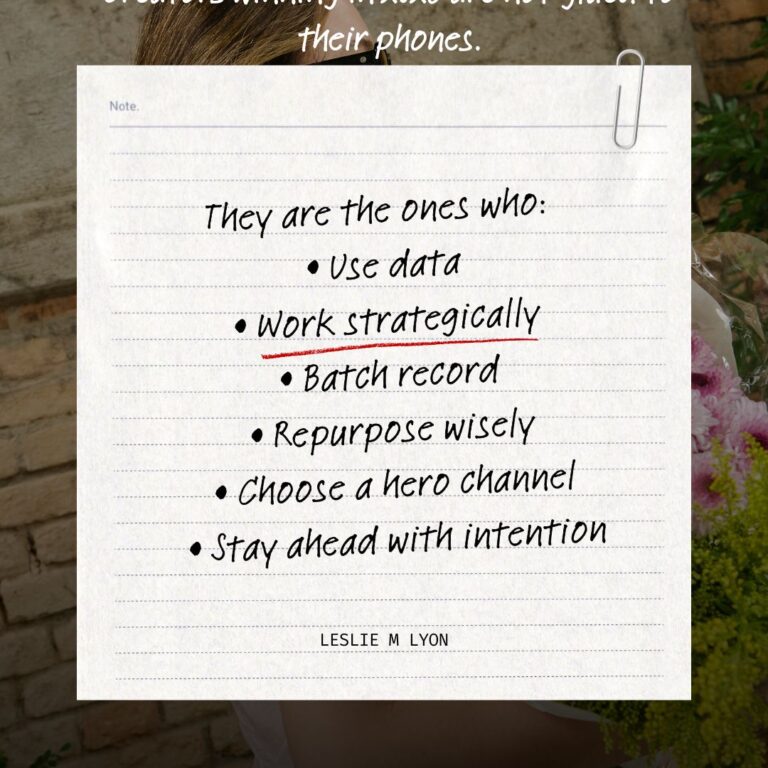
The creators winning with trends in 2026 are not the ones glued to their phones.

They are the ones who:

  • Use data

  • Work strategically

  • Batch record

  • Repurpose wisely

  • Choose a hero channel

  • Stay ahead of the trend curve with intention

You are not trying to “keep up.”
You are trying to build a system.

This is the system.

Finding TikTok Trends Fast: Your Action Plan

Here is your full weekly trend routine in one place:

  • Check TikTok Creative Center

  • Scroll your FYP intentionally

  • Search “trending sounds”

  • Save relevant audio

  • Batch record content

  • Post on Instagram first

  • Repurpose everywhere else

Simple. Scalable. Sustainable.

Next Steps

To continue building your trend strategy, read the next two posts in this series:

Want weekly strategies that actually move the needle?
Subscribe to Market Like a Lyon and get smarter marketing in your inbox every other Sunday.

That's Giving Ick - Market Like a Lyon July 2026 newsletter header
Newsletter
Leslie Lyon

That’s Giving… Ick

How I train my AI content agent to write captions that perform without going basic or fake, plus the two Trial Reel questions I get asked the most.

Read More »

Facebook
Twitter
LinkedIn
Pinterest
Reddit
Email